
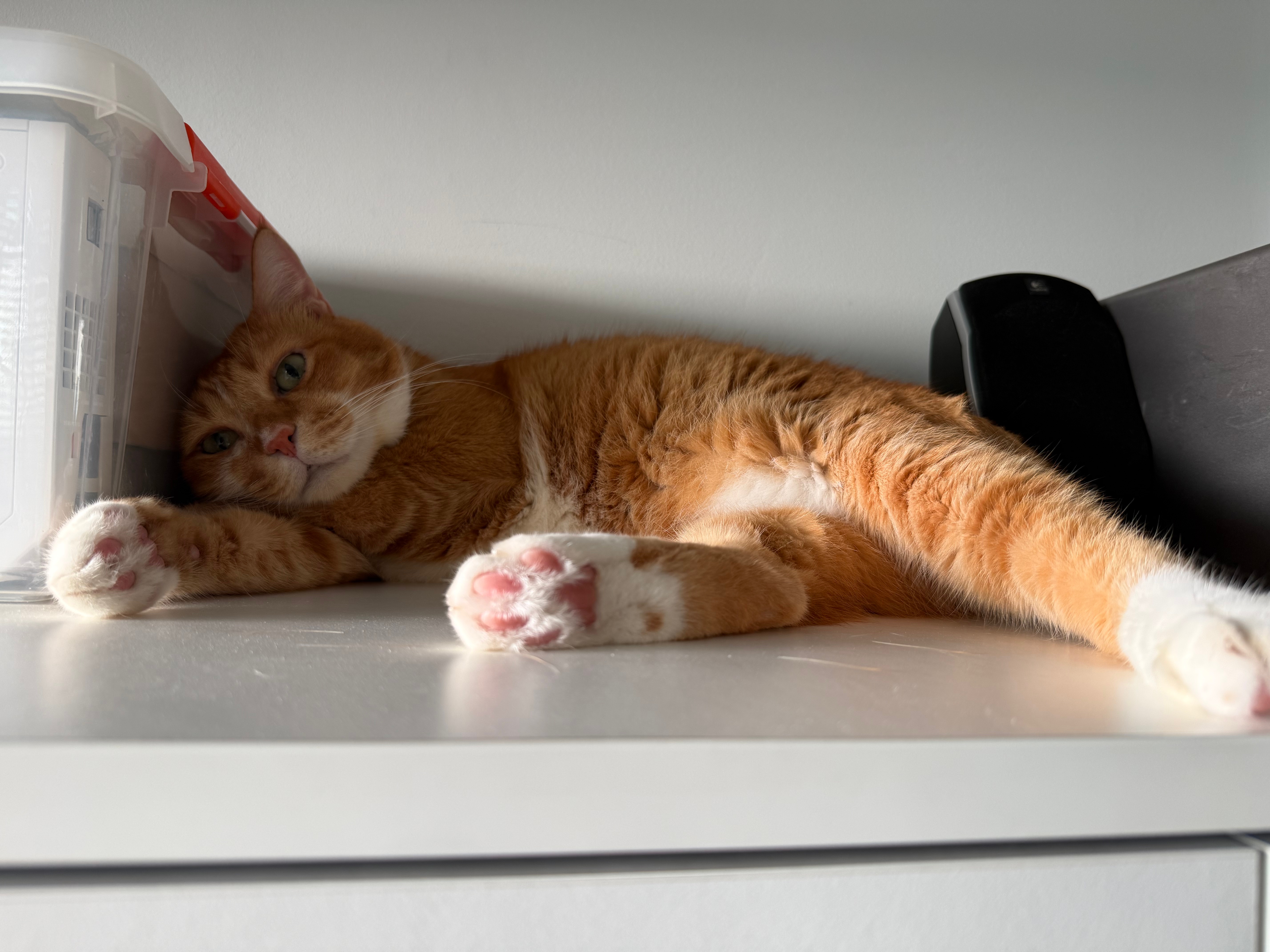
Is Post-Neuter Urination Normal?
Sterilization is a surgical procedure where the reproductive organs are removed to prevent unwanted behaviours and pregnancies, as well as to prevent diseases in both male and female cats. Castration can also be done through a hormonal implant (chemical castration), which is temporary and not permanent. It is not expected that the cat will develop urinary problems due to the sterilization procedure.
However, due to some post-surgical discomfort or if the cat was already urinating outside the litter box before surgery, this behaviour may persist even after sterilization.
Numerous unpleasant habits linked to testosterone (sexual behaviours) like wandering-related accidents, bit wounds (which can put your cat at risk of contracting illnesses) and aggression towards other cats may be reduced or eliminated by neutering your male cat. Following surgery, these changes may happen right away or a few weeks later.
Why Your Cat Might Be Peeing Outside the Litter Box
In cats, changes in urination or defecation locations can be related to medical problems such as feline lower urinary tract disease or various behavioural reasons such as anxiety when accessing the litter box, bullying from cohabiting cats, or resource scarcity.
Medical problems
Inadequate elimination or soiling can be secondary to any medical problem that causes an increase in urine volume, discomfort/pain during elimination, or a decrease in sphincter control such as:
1. Urinary tract infections
2. Feline idiopathic cystitis
3. Urolithiasis (urinary tract stones)
4. Endocrinopathies: hyperthyroidism, diabetes
5. Chronic kidney disease
6. Age-related diseases: osteoarthritis or cognitive dysfunction
7. Incontinence
When medical problems are diagnosed and treated but the behavioural problem persists, this indicates that multiple factors are contributing to the issue. One possibility is that new behaviours were learned during the course of the medical problems. For example, a cat thatbegins urinating in new locations due to a urinary tract condition or diabetes may develop new surface and location preferences, learned avoidance and newly adopted behaviours.
Normal post-surgery discomfort or confusion
After the procedure and although uncommon, it is possible for male cats to show mild side effects from the anaesthesia and surgery, such as lethargy, nausea, or general discomfort.
Because of this, it’s important to carefully follow your veterinarian’s post-operative care instructions to ensure your cat recovers safely and as quickly as possible.
When an animal learns an avoidance response while undergoing a painful process, this response may persist even after the original problem has been resolved.
Residual hormones still influencing behaviour
Cats that are neutered late in life and already exhibited territorial marking behaviour (spraying), are more likely to maintain this behaviour even after surgery because it is a learned behaviour.
After neutering, testosterone can take one to two weeks to disappear from the bloodstream.
During this period, some marking behaviours and odours may persist.
Stress from the vet visit or recovery process
Any stressful event can lead to the development of urinary problems in cats. Stress and anxiety can start at home with placing the pet in the carrier, the trip to the veterinary clinic, the handling and procedures at the clinic, and the return home. For these reasons, adopting cat-friendly preventive measures throughout the process is very important.
Environmental and Behavioural triggers unrelated to surgery
1. Stress and Anxiety:
Cats are highly sensitive to changes in their surroundings and daily routines. Stress or anxiety can cause behavioural changes, including urinating outside the litter box.
Common triggers include moving to a new home, a visit to the vet, introducing a new pet/baby, or shifts in household routines. It is important to identify the stress factors by carefully observation of the cat’s behaviour and environment.
Addressing and minimizing these stressors can help improve their behaviour. The cat should have access to a safe place and a secure area which will significantly reduce stress. This space must include familiar items such as favourite toys, bedding, and easy access to a litter box.
2. Territorial Marking/ Urine Spraying
Marking is a typical instinct in cats, who are inherently territorial. A cat who is spraying will typically hold the tail erect and quiver while spraying urine, often on an upright surface.
However, this tendency may become problematic if it takes place in undesirable places. Understanding what triggers your cat to mark can help you address the problem effectively.
Cats may spray when they feel their territory is threatened, such as when a new cat is introduced into the home or when unfamiliar cats are present nearby. Spraying can also occur due to frustration, including factors like restrictive diets or a lack of adequate playtime—often mistakenly interpreted by owners as revenge. In addition, new scents from items such as furniture or carpeting can trigger spraying behaviour.
– Spaying or neutering: Territorial marking is more common in cats who are not spayed or neutered. This tendency can be greatly decreased or even eliminated by having your cat spayed. Discuss the best time and options for the surgery with your veterinarian.
– Handling Households with Multiple Cats: Competition for territory can lead to improper urinating in homes with several cats. Giving each cat an area of their own, such as separate food bowls, water dishes, and litter boxes, can help reduce stress, lessen conflict, and stop marking activities. Keep in mind that the number of litter boxes should be at least the number of cats plus one. For example, if you had 3 cats, you need 4 boxes minimum.
3. Litter Box Issues
Problems with the litter box are a frequent cause of inappropriate urination. Making sure the litter box as an adequate size, is clean, easy to access, and placed in a suitable location can greatly improve your cat’s behaviour.
– Cleanliness: Cats prefer a clean bathroom area. Scoop the litter box daily and replace the litter regularly to keep it fresh. A dirty and smelly litter box may discourage your cat from using it.
– Type of litter: Many cats are selective about the litter they use. Try different types to determine your cat’s preference. Most cats prefer unscented clumping litter. Odd scents like lavender or talcum powder can repel cats, and many felines prefer clumping litter to regular clay.
– Type of box: Larger size (at least 1.5 times the length of their bodies) and generally open topped boxes are preferred, though there are exceptions
– Location: The litter box should be placed in a quiet, low-traffic area that is easy for the cat to reach. Avoid locations near noisy appliances or busy areas that could make your cat feel stressed.
– Number of litter boxes: the number of boxes should be equal or superior to the number of cats plus one.
Medical Reasons for Inappropriate Urination After Neutering
Feline Lower Urinary Tract Disease (FLUTD)
Feline lower urinary tract disease (FLUTD) isn’t a specific disease, but a syndrome and a term used to describe the signs of conditions that can affect the urinary bladder and/or urethra ofcats. Feline Idiopathic Cystitis (FIC) is the most common cause of FLUDT which is disease without any obvious underlying cause usually triggered by a stressful event.
Complications that require veterinary attention
You should contact your veterinarian right away if you notice any of the following signs after your cat has been neutered:
• The incision site has reopened
• Signs of infection on the incision
• The cat has not urinated within 24 hours
• Refusal to eat
• Swelling or redness around the incision site
The Role of Hormones After Neutering
Neutering may not entirely prevent your cat from spraying, since cats can also spray when they feel nervous, not just to mark territory. However, the odour of urine is usually less strong in neutered cats. Neutering your kitten at a young age can help reduce the likelihood of this behaviour developing in the first place.
How an Automatic Litter Machine Can Help
An automatic litter box provides some benefits and convenience for cat’s tutors by helping keep the litter consistently clean and odour-free, minimizing stress caused by territorial scents, monitoring the cat’s bathroom habits, and providing early warnings of possible health concerns.
It can also be a great help for people with disabilities who, for that reason, have difficulty cleaning the litter box frequently.
On the other hand, there are several concerns of using automatic litter boxes such as:
• Some cats may be startled or stressed by the noises an automatic litter box make because of their sensitive hearing. This could be attenuated with proper training and transition period for better habituation to the noise.
• As cats age, climbing in and out of a robotic litter box—even with a ramp—can become difficult or painful for them crating accessibility challenges. However, there are some options that provide the same level entry with longer ramps for senior cats with joint problems.
• Self-cleaning litter boxes often require specific types of litter to work properly with their cleaning mechanisms. Additionally, they can worsen conflict in multi-cat households, as cats generally prefer larger litter boxes, and the small entrances on many self-cleaning models may feel restrictive or uncomfortable. Nevertheless, you may consult with a cat behaviourist for better assessment of the house and advice on the best litter box options. You may find different types of auto litter boxes from open top ones to larger ones that can accommodate big cats.
• Automatic litter boxes can be prohibitively expensive but there are options for rent at affordable rates.
Practical Steps to Stop the Accidents
The most important thing to do is address the problem promptly. The longer the behaviour persists, the more likely it is to become a habit.
• Clean the litter box often – daily at the very least
• Providing proper, big, multiple litter boxes during recovery and make sure they are placed in quiet places in the house
• Maintaining a calm, stable environment – any pathology can act as a stressor and exacerbate problematic behaviours in predisposed cats. Owners’ reactions can even reinforce the behaviour; for example, yelling at a cat that urinates outside the litter box due to anxiety will increase stress, encouraging the continuation of the behaviour.
• Place a new litterbox near where the inappropriate urination occurred to encourage your kitty to use it
• Use a cleaning product specifically designed to neutralize odours in areas where your cat has urinated outside the litter box.
• Using pheromones diffuser to help your cat feel more secure and relaxed, which can help reduce stress and urine marking
When to See the Vet
You should always consult a veterinarian if your cat shows pain or difficulty urinating, blood in the urine, or urinates outside the litter box for more than one to two weeks after sterilization.
Conclusion
Whether it’s a medical condition, behavioural issue, or environmental factor, identifying the root cause is key to resolving the problem and both medical and learned factors contribute to the development of symptoms.
Although unwanted behaviours can develop without being related to a pathology, it is quite common for cats with a behavioural problem to have one or more underlying conditions that play a significant role in the problem, or to have a medical history indicating previous problems.
In these situations, the impact of these pathologies on the animal’s current problematic behaviour should be considered to analyse how the behaviour has evolved. Underlying medical problems may affect the threshold at which a cat exhibits a behavioural response or may affect learned associations.
In certain cases, an underlying medical or physiological problem should be suspected when a cat shows signs of abnormal or unexpected behaviour, such as urinating outside the litter box.
In these situations, before assuming the problem is behavioural, further investigations are indicated, which may include blood tests, urine tests, blood pressure measurement, neurological examination, or imaging tests.
Failure to recognize these signs will lead to ineffective treatment programs and may also compromise the cat’s health and well-being.

Links for references:
https://catvets.com/wp-content/uploads/2024/01/FelineBehaviorGLS.pdf
https://www.vet.cornell.edu/departments-centers-and-institutes/cornell-feline-health-center/health-information/feline-health-topics/feline-behavior-problems-house-soiling
https://icatcare.org/articles/feline-lower-urinary-tract-disease
Amat, M., Camps, T., Manteca, X. (2016) Stress in owned cats: behavioural changes and welfare implications. Journal of Feline Medicine and Surgery, 18(8),577-86.
Heath S. (2019) Common feline problem behaviours: Unacceptable indoor elimination.
Journal of Feline Medicine and Surgery, 21(3),199-208.- Mills, D., Karagiannis, C., Zulch, H. (2014) Stress–its e ects on health and behavior: a guide for practitioners. Veterinary Clinics of North America: Small Animal Practice, 44(3), 525-541.
Disclaimer: Grin Like Cheshire is not affiliated with the featured brands and trademark rights remain the property of their respective owners. Above information is for educational purposes only and does not constitute medical advice. Always seek the advice of a qualified healthcare provider with questions regarding a medical condition.